Your AC Is Fighting Two Battles at Once in Northeast Florida
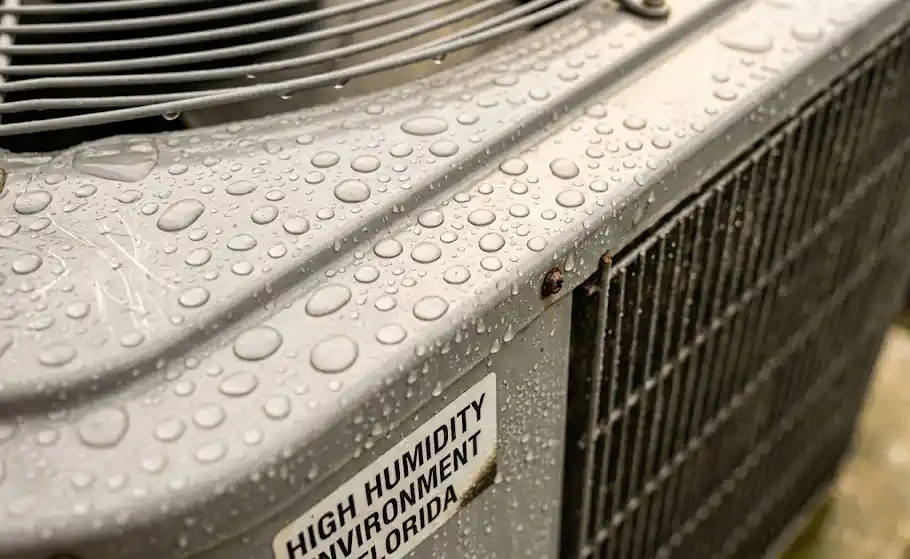
In most parts of the country, an air conditioner’s main job is to cool the air. In Northeast Florida, it has a second job running at the same time: pulling moisture out of the air. That second job is relentless here, and it puts a kind of strain on HVAC systems that homeowners in drier climates never have to think about.
If your home feels sticky even when the AC is running, or if your system seems to run constantly without ever getting ahead, humidity is usually somewhere in the conversation. Understanding what’s actually happening inside the system can help you figure out whether this is a maintenance issue, an equipment issue, or something your AC simply can’t handle on its own.
If you’re dealing with a home that won’t get comfortable no matter how hard the system runs, Kiener’s Heating & Air Conditioning can help you figure out what’s going on. Call (904) 231-8873 or use the online scheduling form to request service.
What Your AC Is Actually Doing With All That Moisture
When warm, humid air passes over your evaporator coil, two things happen: the air cools down, and moisture condenses out of it onto the coil’s surface. That moisture drips into the drain pan and exits through the condensate line.
In a place like Keystone Heights or Orange Park, where summer relative humidity percentage averages in the mid-70s and climbs well above that during overnight hours and afternoon storms, your system is pulling an enormous amount of water out of the air every single day. This constant dehumidification work adds load to the system and is a big reason why drain line clogs, coil issues, and comfort complaints are so common in this part of Florida.
A properly functioning AC system should handle both temperature and humidity. If your home is hitting the thermostat’s target temperature but still feels muggy inside, the system may be cooling the air without adequately drying it.
This often happens when the system short-cycles — running in brief bursts that drop the temperature quickly without giving the coil enough time to pull meaningful moisture out of the air. It can also happen when the coil is dirty, when refrigerant charge is off, or when humid air is leaking into the duct system from unconditioned spaces like an attic or crawl space.
Common Reasons an AC System Struggles With Humidity
When a home in Northeast Florida feels sticky despite a running AC, there’s usually a specific reason — and it’s worth knowing what to look for before assuming the system needs to be replaced.
The system may be oversized. This is one of the more counterintuitive HVAC problems. A unit that’s too large for the space cools the air quickly and shuts off before it’s had enough run time to pull meaningful moisture out. Short cycles keep the temperature down but leave humidity high. Homes in Middleburg and Jacksonville with oversized equipment often have this problem without ever realizing the equipment is the cause.
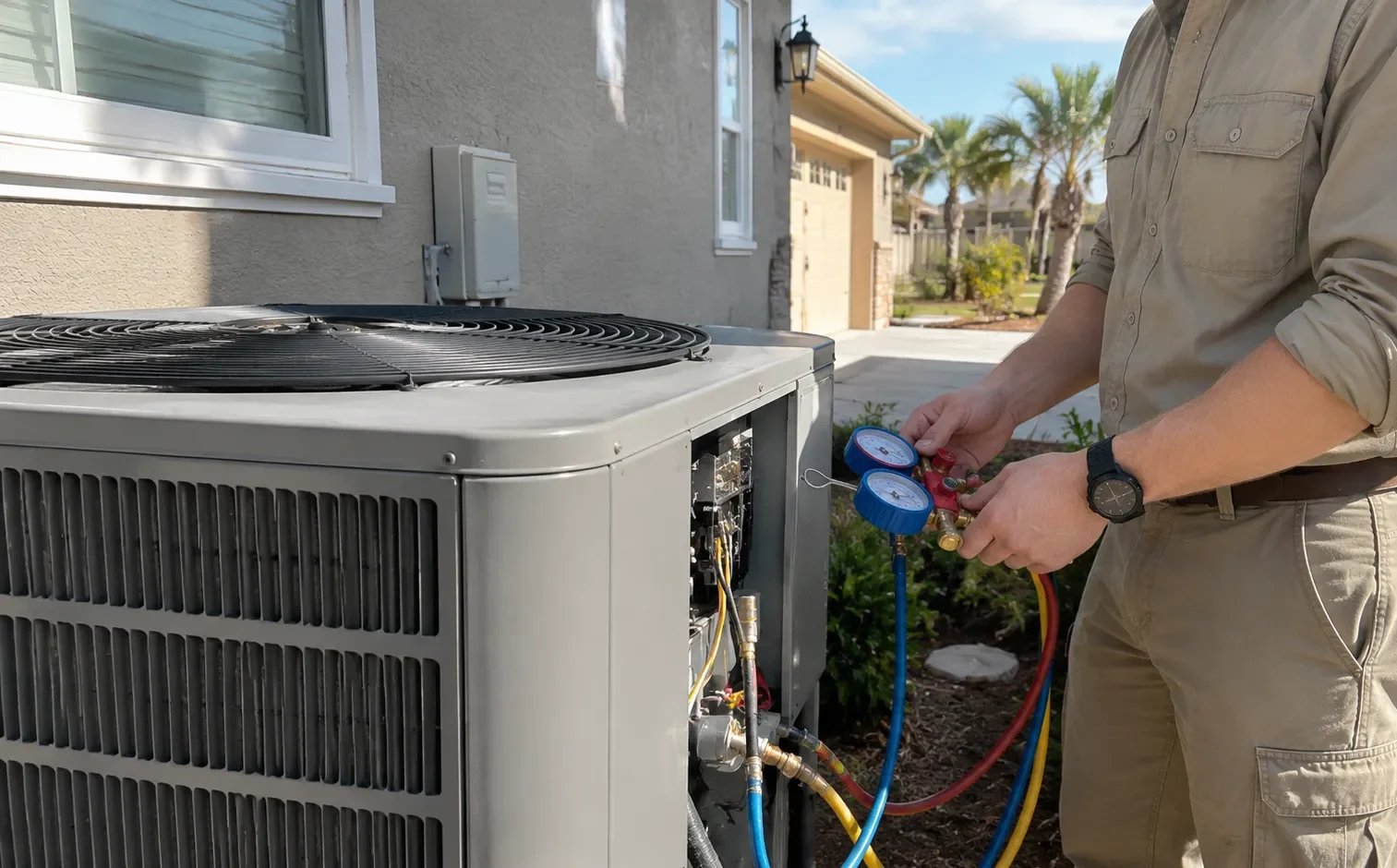
The system may be low on refrigerant. When refrigerant charge is off, the coil doesn’t get as cold as it should, which reduces how effectively it pulls moisture from the air. The system keeps running but doesn’t dehumidify well.
The evaporator coil may be dirty. A coil coated in dust and debris can’t transfer heat — or pull moisture — as efficiently. This is something that gets addressed during routine HVAC maintenance, and it makes a noticeable difference in how the system handles humidity.
There may be air leaks in the duct system. Unconditioned, humid air from the attic or crawl space leaking into the duct system puts extra moisture load on the equipment. Homes in Northeast Florida with older ductwork or flex duct that’s come loose at the connections are particularly prone to this.
Check Your Air Filter
A clogged filter restricts airflow across the evaporator coil, which reduces the system’s ability to dehumidify. If it’s grey and matted, replace it before anything else.
Set the Fan to “Auto”
Running the fan continuously recirculates moisture that’s condensed on the coil back into the airstream. Setting it to “auto” lets the coil drain properly between cycles.
Check Vents and Returns
Closing vents in unused rooms disrupts system balance and can reduce dehumidification performance across the whole house. Keep them open and unblocked.
What High Indoor Humidity Does Over Time
Beyond comfort, chronic indoor humidity causes real damage. In Northeast Florida homes, the combination of heat and moisture creates conditions where mold and mildew can establish themselves quickly — inside the air handler, on the evaporator coil, inside ductwork, and on walls near supply vents where condensation forms.
Wood flooring, door frames, and cabinetry swell and warp. Musty odors develop. Allergy and respiratory symptoms get worse. None of this happens overnight, but if indoor humidity stays consistently above 60%, the effects accumulate faster than most homeowners expect. The EPA and ASHRAE both recommend keeping indoor relative humidity between 30% and 50% — an inexpensive hygrometer from any hardware store can tell you where your home actually sits.
When the AC Alone Isn’t Enough
In Northeast Florida’s climate, some homes have more humidity than a standard AC system is designed to handle on its own. This is especially common in homes with a lot of square footage relative to the system’s runtime, older homes with drafty construction that lets humid outdoor air infiltrate, and homes near lakes, wetlands, or heavily wooded areas — which covers a lot of ground throughout Clay County and around Keystone Heights. It’s also a frequent issue in homes where the AC was replaced with a larger unit without anyone accounting for the dehumidification tradeoff.
In these situations, a whole-home dehumidifier installed in line with the HVAC system can make a significant difference. Unlike portable units that drain into a bucket or require constant emptying, a whole-home system connects to the existing condensate drain and runs automatically. It takes the humidity load off the AC, which can actually extend the life of the equipment and reduce energy use. Kiener’s offers dehumidifier options for homeowners dealing with persistent humidity problems.
When to Call a Licensed HVAC Contractor
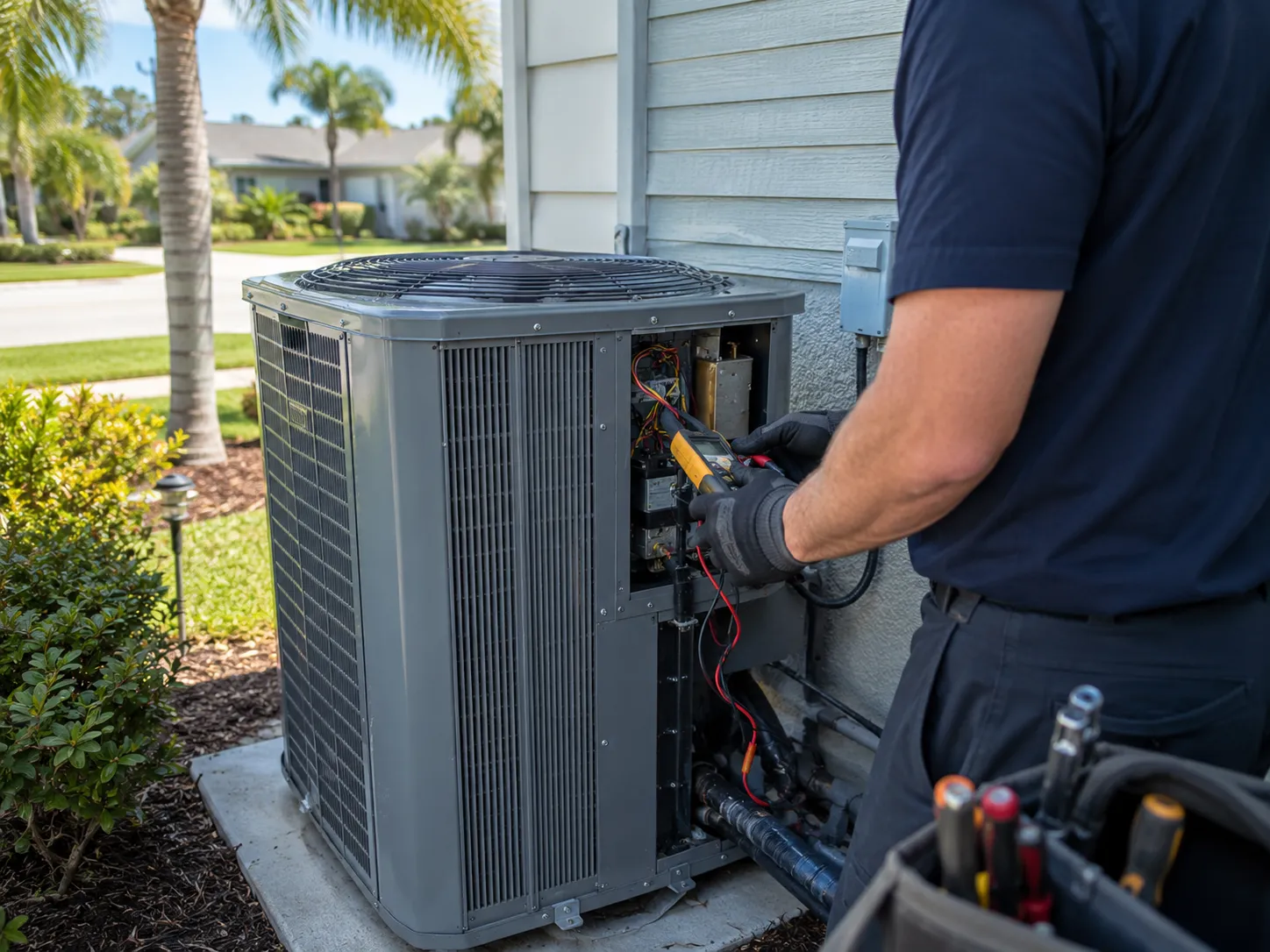
Persistent indoor humidity that your AC can’t seem to get ahead of is worth having a licensed HVAC contractor look at — not because something is necessarily broken, but because the system may not be set up correctly for the conditions it’s working in. Equipment sizing, refrigerant charge, coil condition, and duct integrity all factor into how well a system manages moisture in a climate like Northeast Florida’s.
If your home never gets comfortable despite a running AC, if you’re noticing musty smells, visible moisture near the air handler, or rooms that always feel damp, those are signs worth investigating before the problem creates bigger damage.
Still Dealing With a Humid Home?
Kiener’s Heating & Air Conditioning works with homeowners in Jacksonville, Keystone Heights, Middleburg, Orange Park, and nearby communities to diagnose comfort problems that go beyond temperature. If your home never feels as dry as it should, we can help identify whether the issue is with the system, the equipment size, or the indoor air quality setup.
Call (904) 231-8873 or complete the online scheduling form to request service.
Written by
Steve Kiener
Owner & Licensed HVAC Contractor at Kiener's Heating & Air Conditioning
Steve is the owner of Kiener's Heating & Air Conditioning, a licensed HVAC contractor serving Keystone Heights, Jacksonville, Middleburg, Orange Park, and nearby Northeast Florida communities. With more than a decade of HVAC industry experience, Steve has worked across multiple sides of the business, including maintenance, service, installation, customer communication, and system troubleshooting. He brings a practical, full-system approach to every service call and helps homeowners understand what is happening with their equipment before making a decision. Whether a customer needs AC repair, HVAC maintenance, a second opinion, or help with a system that is no longer keeping up, Steve is focused on providing clear answers, honest guidance, and dependable comfort solutions.