Mold Inside an AC System Is More Common Than Most Florida Homeowners Realize
Most people think of mold as something that grows behind drywall after a plumbing leak or in a bathroom that doesn’t have enough ventilation. In Northeast Florida, air conditioning systems are another place where mold and mildew can develop surprisingly easily. The same moisture your AC removes from the air every day can create ideal conditions for growth when drainage, airflow, or maintenance issues allow damp surfaces to stay wet longer than they should.
Because our cooling season lasts much longer than it does in most parts of the country, HVAC equipment in Jacksonville, Orange Park, Middleburg, Fleming Island, Green Cove Springs, and surrounding communities spends months operating in extremely humid conditions. That means the evaporator coil, condensate drain system, and other components are constantly handling moisture.
If you’ve noticed a musty smell coming from your vents, rooms that feel damp even with the AC running, or concerns about indoor air quality, Kiener’s Heating & Air Conditioning can inspect the system and determine whether mold, mildew, humidity, or another HVAC issue is contributing to the problem.
Why Air Conditioners Create Conditions Where Mold Can Grow
Air conditioners do more than cool your home. Every time warm indoor air passes over the evaporator coil, moisture condenses onto the coil surface and drains away through the condensate system. In Florida’s climate, that process can remove several gallons of water from indoor air on a humid day.
Normally, that moisture is collected, drained, and safely removed from the home. Problems begin when water doesn’t leave the system as efficiently as it should. A partially clogged drain line, standing water in a drain pan, restricted airflow, or excessive indoor humidity can all create conditions where surfaces remain damp for extended periods.
Mold spores are naturally present in virtually every indoor environment. They don’t need an invitation to enter the HVAC system because they’re already there. What they need is moisture. Once moisture becomes consistently available, mold and mildew can begin developing on dust, organic debris, and other materials that accumulate inside the equipment.
That’s one reason routine HVAC maintenance is so important in Northeast Florida. Small moisture issues that go unnoticed for months often become the source of larger indoor air quality complaints later.
Where Mold Usually Develops Inside an HVAC System
Many homeowners assume mold problems start inside the ductwork, but the evaporator coil is often one of the first places technicians inspect. The coil remains cold while the system operates and is exposed to constant condensation throughout the cooling season.
Dust and debris that accumulate on the coil can provide a surface where mold begins to establish itself. Because the coil is hidden inside the air handler, homeowners rarely see the issue until odors or performance problems become noticeable.
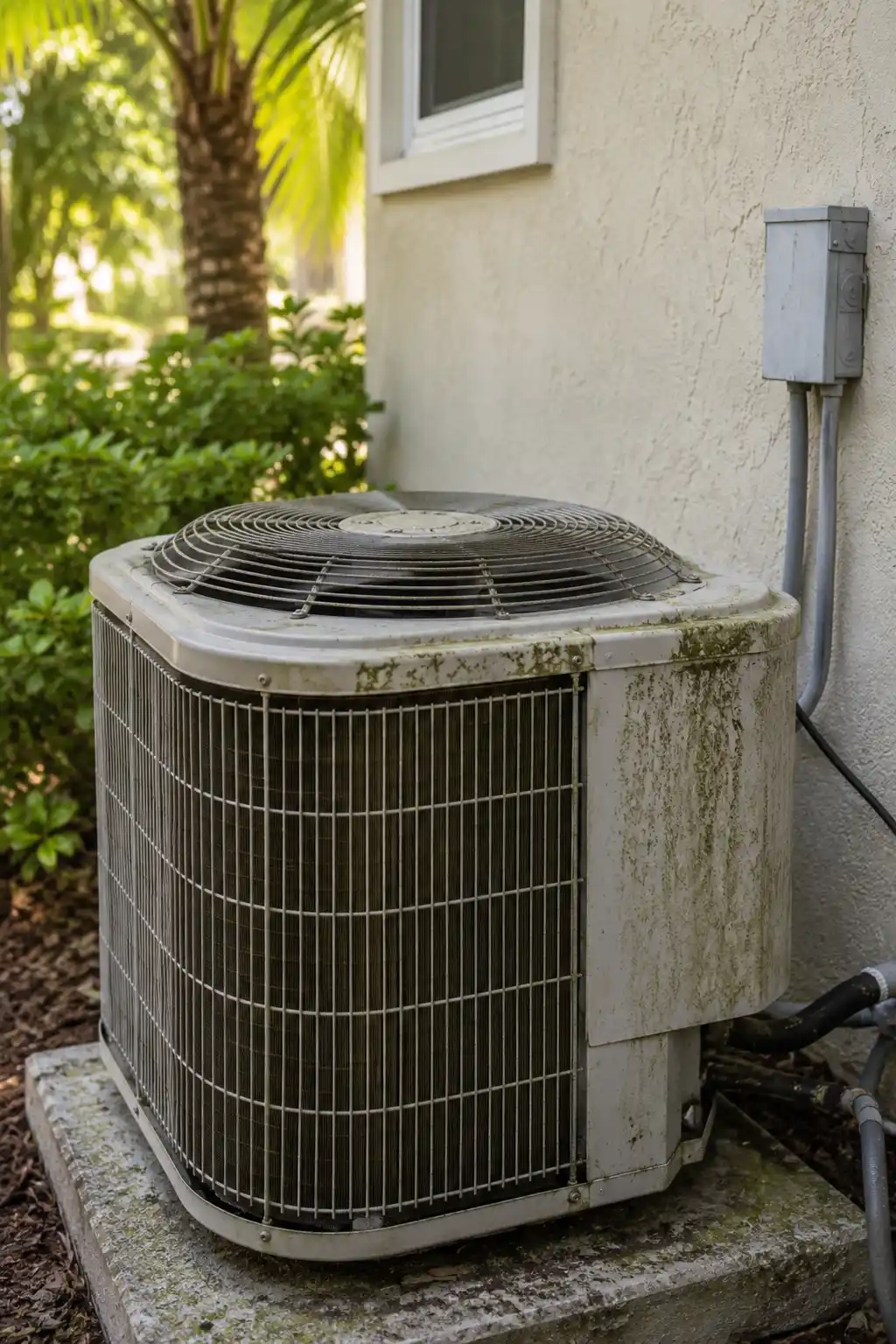
The condensate drain pan is another common trouble spot. If water remains in the pan instead of draining properly, mildew growth can begin surprisingly quickly during Florida’s hottest months. Drain line clogs are particularly common in this region because algae, biofilm, and organic buildup thrive in warm, damp conditions.
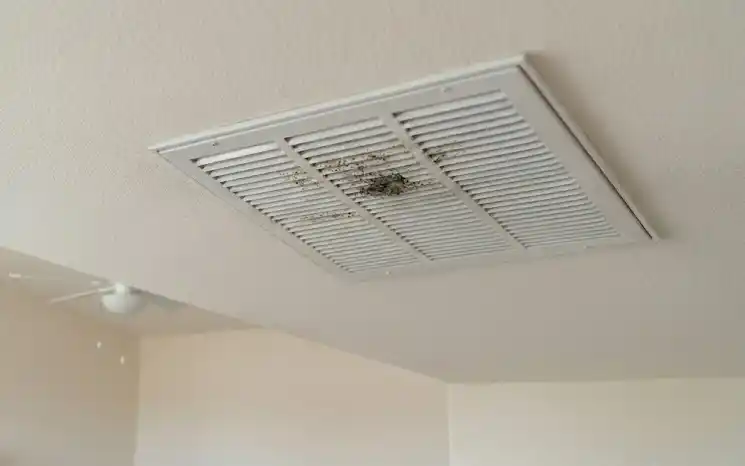
In some situations, mold may also appear near supply vents, inside ductwork, or around insulation that’s been exposed to prolonged moisture. Determining the actual source requires inspection because visible growth near a vent isn’t always where the problem originated.
Evaporator Coil
Cold surfaces and constant condensation make the evaporator coil one of the most common places for mold growth to begin.
Drain Pan & Line
Standing water, algae buildup, and clogged drain lines create conditions where mildew can develop quickly.
Supply Vents
Condensation near vents or inside ductwork can sometimes lead to visible growth around registers.
Why Northeast Florida Homes Are Especially Vulnerable
Humidity is the biggest reason mold-related HVAC concerns are so common throughout Northeast Florida. Jacksonville regularly experiences summer dew points that climb into the 70s, and outdoor humidity often remains elevated even after temperatures cool in the evening.
That means air conditioners spend much of the year removing moisture from incoming air. Every door opening, every duct leak, and every source of outdoor air infiltration adds more humidity that the HVAC system must manage.
Homes near the St. Johns River, coastal areas around Jacksonville Beach and Ponte Vedra, wooded properties in Keystone Heights, and neighborhoods surrounding lakes and wetlands often experience even greater humidity challenges. While the HVAC system is designed to handle moisture, it must operate correctly to keep up with those conditions.
When equipment is oversized, poorly maintained, or struggling with airflow problems, humidity can begin accumulating indoors. Once indoor humidity levels remain elevated for long periods, mold growth becomes much more likely.
Signs Mold May Be Growing Inside Your AC System
The most common complaint homeowners report is a musty smell when the air conditioner starts running. Some describe it as the smell of a damp basement, wet cardboard, or old towels. The odor may be strongest first thing in the morning or after the system has been off for several hours.
You may also notice certain rooms feeling damp despite reaching the thermostat setting. Windows may show more condensation than normal, and allergy symptoms sometimes become more noticeable indoors than outdoors.
Visible growth around vents can be another warning sign, although it is important not to assume every dark spot is mold. Dust accumulation, insulation particles, and other contaminants can sometimes resemble biological growth. A professional inspection helps determine what’s actually present and whether the HVAC system is involved.
If you notice water around the indoor air handler, repeated drain line backups, or persistent musty odors that return shortly after changing the filter, those issues are worth investigating sooner rather than later.
Do UV Lights Actually Help Prevent Mold?
UV lights are one of the most commonly discussed indoor air quality upgrades for Florida homes. Installed near the evaporator coil, these systems expose HVAC surfaces to ultraviolet light that can help limit biological growth on damp components.
UV technology is not a cure-all, and it won’t solve underlying drainage or humidity problems. If water is collecting inside the system because of a clogged drain line or other mechanical issue, that problem still needs to be addressed. However, many homeowners dealing with recurring mold concerns find UV systems to be a useful supplemental measure.
Indoor air quality solutions work best when combined with proper maintenance, humidity control, clean coils, and a functioning condensate system. Addressing the root cause of moisture is always more important than simply treating the symptoms.
Can Homeowners Clean Mold Themselves?
Homeowners can take steps to reduce moisture and maintain their systems, but cleaning mold inside HVAC equipment is not always straightforward. The evaporator coil and interior components are often difficult to access without partially disassembling the equipment.
Pouring household chemicals into a drain line, aggressively scrubbing components, or attempting to clean sensitive HVAC parts without proper training can sometimes create additional problems. In some cases, homeowners end up damaging components or overlooking the source of the moisture that’s causing the growth.
The most effective approach is usually addressing the underlying cause first. That may involve clearing a clogged drain line, correcting airflow problems, cleaning the evaporator coil, repairing duct leaks, or improving overall humidity control within the home.
How Regular HVAC Maintenance Helps Prevent Mold and Mildew
Many mold-related HVAC issues begin as routine maintenance issues. A dirty coil, clogged condensate line, neglected drain pan, or restricted air filter may seem minor individually, but together they create conditions where moisture lingers longer than it should.
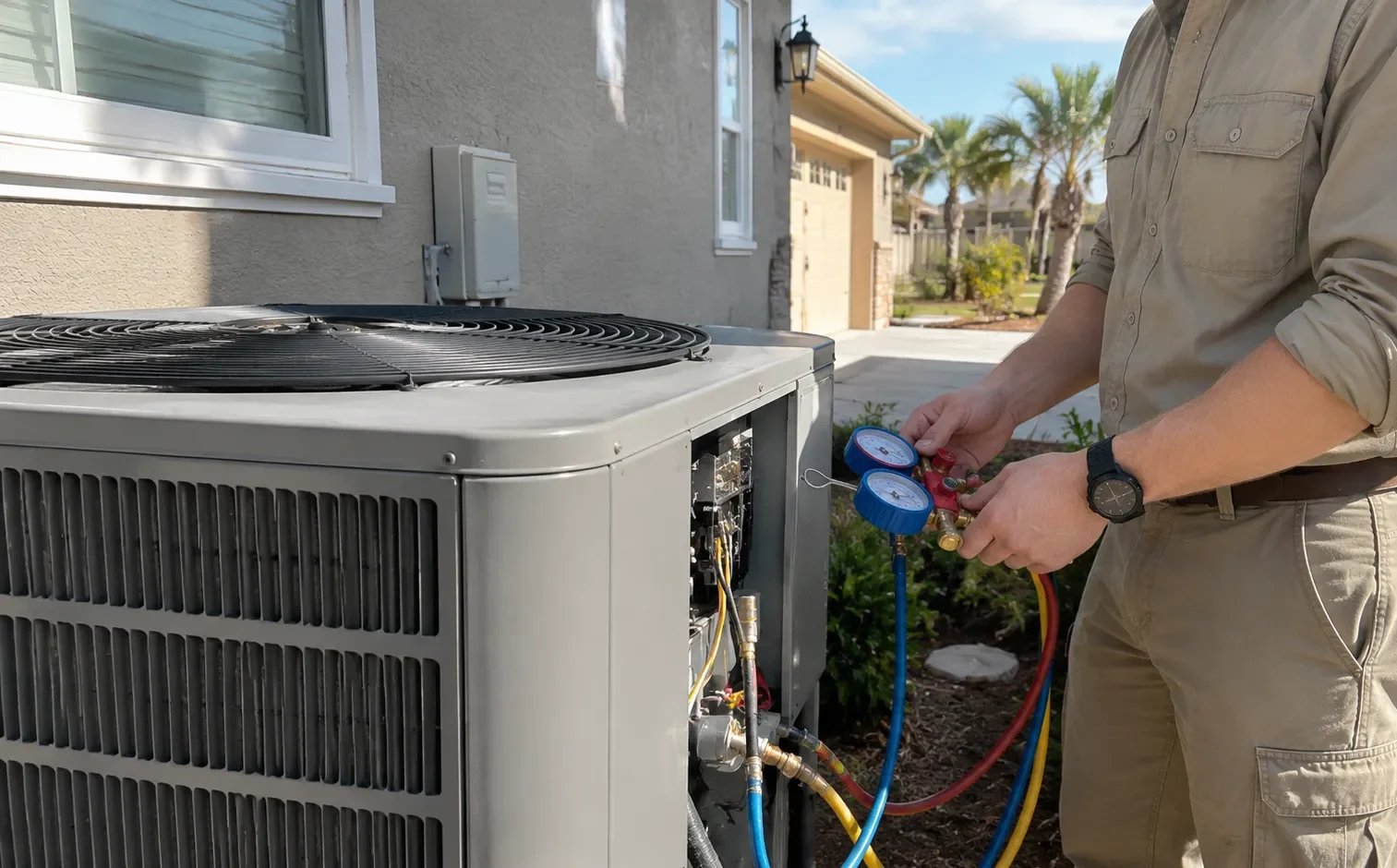
During professional maintenance visits, technicians inspect drainage components, verify airflow, evaluate coil condition, and look for signs of developing moisture problems before they become larger concerns. In a climate like Northeast Florida’s, those inspections can make a significant difference.
Preventing mold growth is often much easier and less expensive than dealing with a system that has already developed persistent moisture-related issues.
Concerned About Mold or Musty Odors From Your AC?
If your air conditioner smells musty, your home feels unusually humid, or you’ve noticed signs of moisture around the HVAC system, it’s worth having the equipment inspected before the problem gets worse. Northeast Florida’s climate creates unique challenges for HVAC systems, and identifying the source early can help protect both comfort and indoor air quality.
Kiener’s Heating & Air Conditioning provides AC repair, maintenance, indoor air quality services, and humidity-control solutions for homeowners throughout Jacksonville, Orange Park, Middleburg, Fleming Island, Keystone Heights, and nearby communities.
Call (904) 231-8873 or complete the online scheduling form to request service.